Millions of Views but No Money? Here's What YouTube Changed
Published : February 2026
YouTube Just Changed the Game: Why Scrolling Past a Video Now Counts as a View (And Why It Doesn't Matter for Your Money)
Millions of Views but No Money? Here’s What YouTube Changed. The view count was once the crown jewel of YouTube success. Creators chased it. Brands paid for it. Everyone celebrated it. But in 2025, YouTube quietly redefined what a “view” actually means — and if you’re a creator trying to monetize your channel, this changes everything.
The Big Shift: Scrolling Now Counts as a View
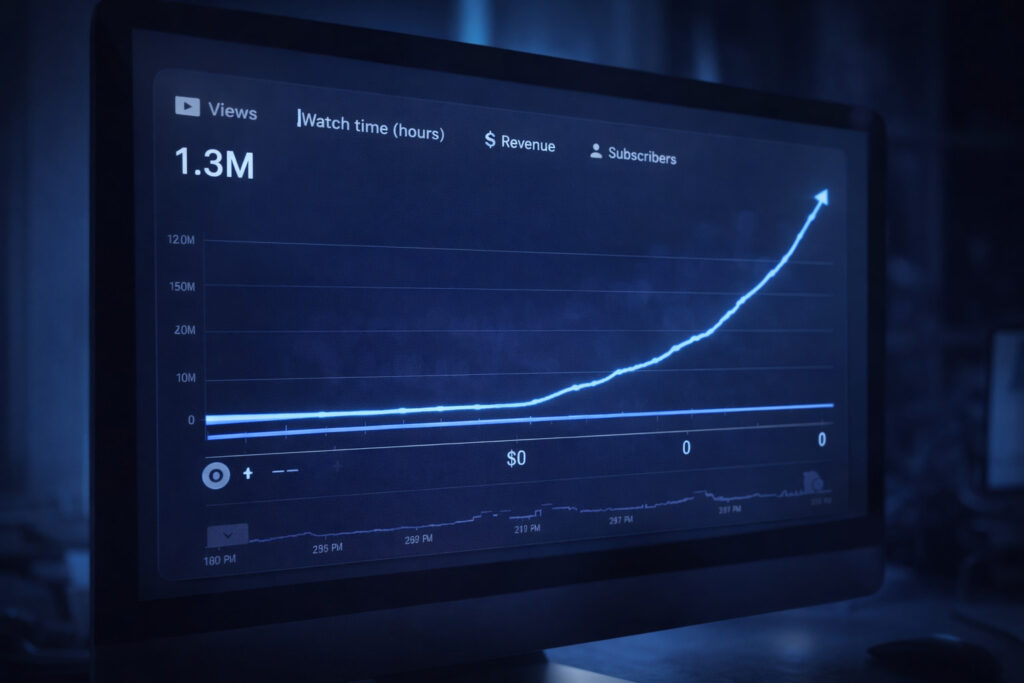
Yes, you read that right. YouTube has updated its view counting system to include impression-level views — meaning when a video appears on someone’s screen while they’re scrolling through their feed, even for a split second, it can register as a view.
No click. No watch. Just a scroll.
This means that viral-looking view counts can now be massively inflated. A video sitting at 500,000 views might have only been actually watched by a fraction of those people. The rest? They just scrolled past it on their home feed or Shorts shelf.
Sounds alarming, right? Here’s why you should — and shouldn’t — panic.

The Big Shift: Scrolling Now Counts as a View
Yes, you read that right. YouTube has updated its view counting system to include impression-level views — meaning when a video appears on someone’s screen while they’re scrolling through their feed, even for a split second, it can register as a view.
No click. No watch. Just a scroll.
This means that viral-looking view counts can now be massively inflated. A video sitting at 500,000 views might have only been actually watched by a fraction of those people. The rest? They just scrolled past it on their home feed or Shorts shelf.
Sounds alarming, right? Here’s why you should — and shouldn’t — panic.
So What Actually Matters? Meet Engaged Views.
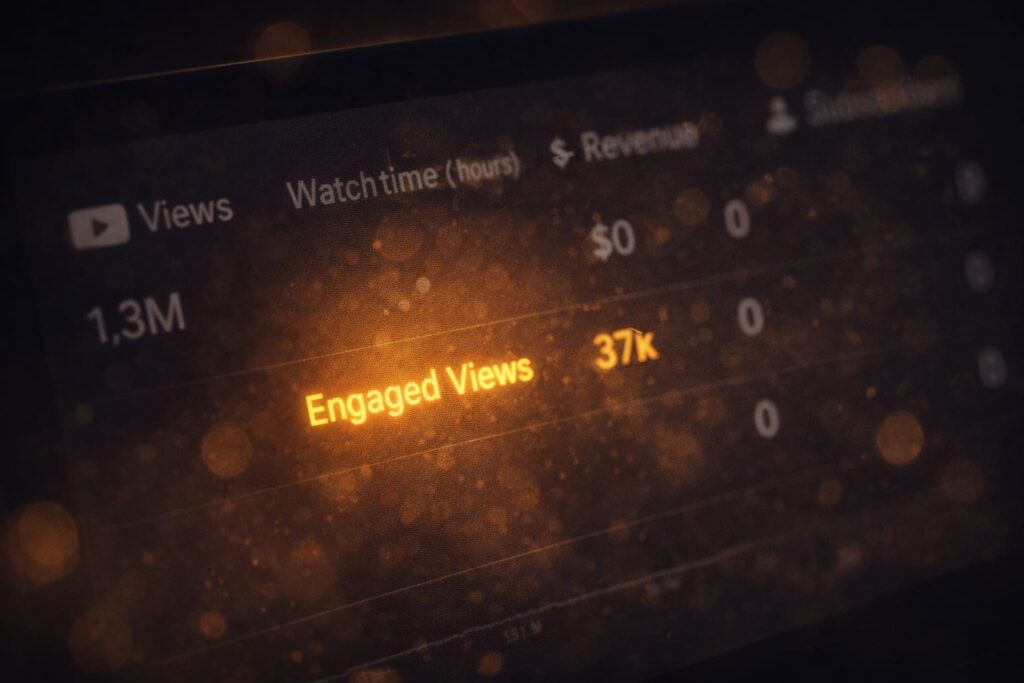
Engaged Views are the metric that YouTube’s monetization engine actually cares about. An engaged view is counted when a viewer:
- Clicks on your video intentionally
- Watches for a meaningful duration (not just a 2-second accidental scroll)
- Interacts — likes, comments, shares, or saves
- Doesn’t immediately bounce back to the feed
YouTube’s ad revenue system, channel memberships, Super Thanks, and brand deal algorithms are all quietly shifting toward rewarding engaged views over raw view numbers. Advertisers are smarter now too — they’re buying engaged audiences, not just eyeballs.

The Creator Trap: Chasing Numbers That Don't Pay
Many creators are still optimizing for raw views. They create clickbait thumbnails, post at high-traffic times, and chase trends — all to pump up a number that no longer means what it used to.
The result? Millions of views. Terrible RPM. Confused creators wondering why their “viral” video barely made them $50.
Here’s the uncomfortable truth: a video with 10,000 deeply engaged views will almost always outperform a video with 500,000 scroll-past views in terms of revenue, brand deals, and long-term channel growth.
YouTube’s algorithm has evolved to detect this. It knows the difference between a viewer who watched 80% of your video and left a comment versus someone who saw your thumbnail for 0.3 seconds while scrolling to cat videos.
What This Means for Your Content Strategy
If you want to thrive under this new reality, your strategy needs to shift in a few key ways.
- Hook harder in the first 3 seconds. With scroll-views becoming common, you need to immediately stop the thumb. Your opening frame and first line of audio need to arrest attention instantly.
- Encourage real interaction. Ask viewers to comment, share their opinion, or answer a question. Engaged viewers who interact are far more valuable to the algorithm than passive ones.
- Optimize for Watch Time and Retention. YouTube Studio now shows you average view duration and audience retention curves. These are your real KPIs now. A high retention rate signals to YouTube that your content is genuinely valuable — and that’s what unlocks monetization rewards.
- Study your engaged view rate. In YouTube Analytics, look beyond raw views. Check your click-through rate (CTR), average watch duration, and subscriber conversion rate per video. These tell the real story.
- Create for your audience, not for the algorithm. It sounds cliché, but it’s truer now than ever. Content that genuinely serves your niche will earn real watches, real comments, and real loyalty — all of which translate to real income.
What This Means for Your Content Strategy
For Brands and Advertisers: Time to Rethink Influencer Metrics
If you’re a brand working with YouTube creators, stop buying views and start buying engagement rates. A creator with 50,000 highly engaged subscribers in your niche is worth ten times more than a creator with 1 million passive followers who scroll past their content.
Ask for:
- Average view duration
- Comment-to-view ratio
- CTR on recent videos
- Engaged view percentage in their analytics
These numbers don’t lie. Raw views increasingly do.
The Bottom Line
YouTube’s evolution toward scroll-based view counting is actually a gift to serious creators — if you know how to read it. It exposes the gap between creators who chase numbers and those who build real communities.
The new YouTube success formula is simple:
Fewer views that mean more > More views that mean nothing.
Engaged views are the currency of the new YouTube economy. They drive ad revenue, attract brand deals, boost algorithm distribution, and build the kind of loyal audience that sustains a channel for years.
Stop chasing the view count. Start earning the watch.
Found this helpful? Share it with a creator who’s still obsessing over view numbers — they need to read this.